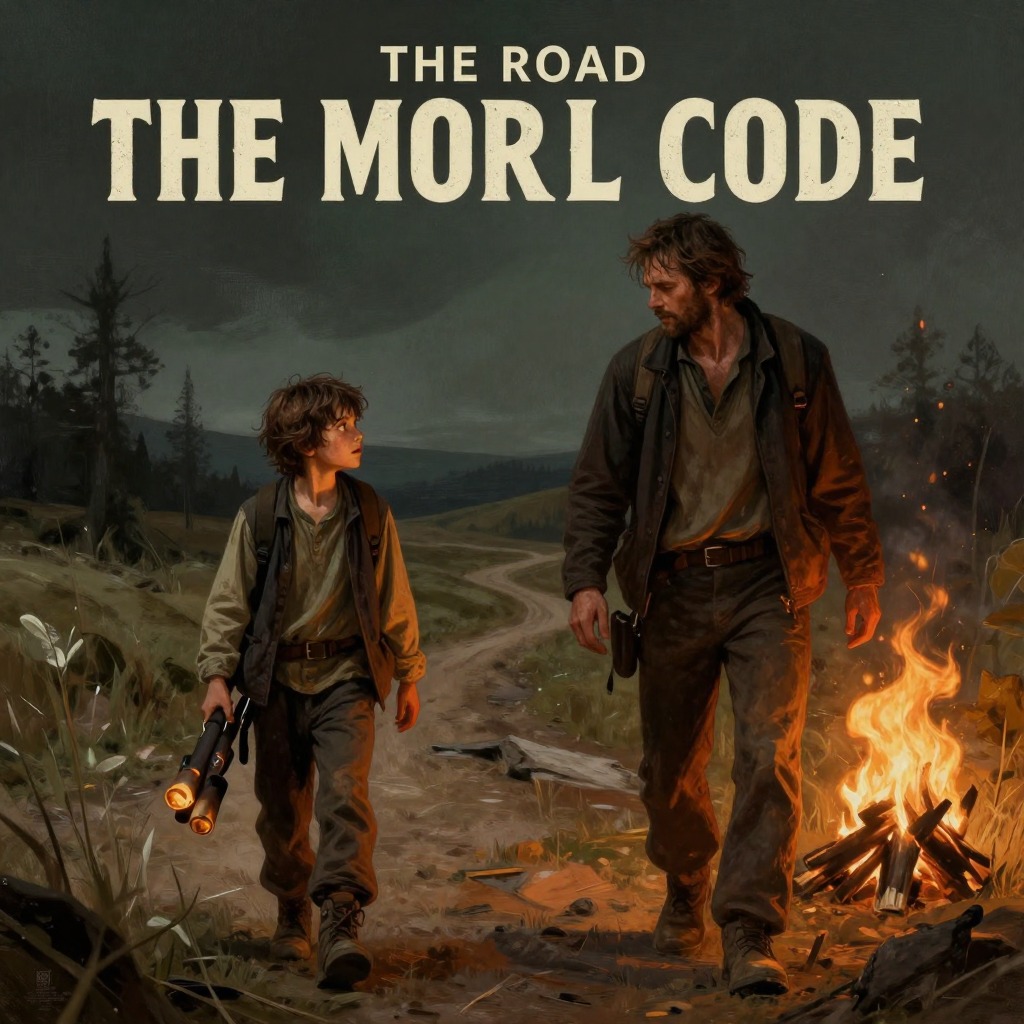
We wouldnt ever eat anybody
The rule "We wouldnt ever eat anybody" is the foundational ethical commandment that the man and the boy carry through the ashes of a ruined world. In a landscape where cannibalism has become the norm—where marauding bloodcults consume human flesh, where a charred infant is found roasting on a spit, and where basement prisoners are kept as livestock—this prohibition is the single moral law that separates the protagonists from the surrounding savagery. The rule is not merely a dietary preference but the very definition of their humanity, the content of the "fire" they believe they carry, and the principle that the boy, in particular, insists upon even when survival hangs in the balance.
Origin and Articulation of the Rule
The rule is first explicitly stated during a roadside conversation when the boy, troubled by the implications of their journey, asks directly: "We wouldnt ever eat anybody, would we?" The man responds with absolute certainty: "No. Of course not." When the boy presses further—"Even if we were starving?"—the man acknowledges their current starvation but reaffirms the prohibition: "No. No matter what." This exchange, recorded in evidence E00283, establishes the rule as unconditional, binding regardless of circumstance. The boy then connects the rule to their identity: "Because we're the good guys." The man confirms: "Yes." The rule is thus not a practical guideline but an ontological claim—it defines who they are.
Testing the Rule: Encounters with the Starving
The rule is tested almost immediately after its articulation. When the man and boy encounter a man struck by lightning, sitting burned and helpless in the road, the boy pleads: "Cant we help him? Papa?" The man refuses: "No. We cant help him. There's nothing to be done for him" . The boy's compassion is rebuffed, but the rule against eating people remains intact—the refusal to help is a matter of survival, not a violation of the prohibition. Later, when they discover the basement prisoners—naked people huddled against a wall, a man with his legs burnt to the hip—the boy is traumatized, but the rule is not questioned; the horror is that others have broken it .
The Rule in Conflict: The Thief
A more direct test occurs when the man and boy catch the thief who has stolen their cart. The man strips the thief naked and leaves him to die in the cold, a punishment that the boy finds unbearable. The boy sobs: "Just help him, Papa. Just help him." The man responds: "He was just hungry, Papa. He's going to die." The boy's ethical framework, however, does not permit abandoning a starving man, even one who tried to rob them. The man eventually relents, leaving the thief's clothes and shoes in the road, but the boy later says: "But we did kill him" . The rule against eating people is never broken, but the boy's conscience demands a more active compassion than the man can provide.
The Rule as Identity: The Final Encounter
When the boy is finally taken in by a new family, he asks the man who finds him: "You dont eat people." The man replies: "No. We dont eat people" . This confirmation is the boy's final test—the rule is the password that admits him into a new community of "good guys." The rule has been preserved, passed on, and remains the defining feature of those who carry the fire.
Thematic Significance
The rule "We wouldnt ever eat anybody" functions as the moral center of The Road, a categorical imperative in a world stripped of all other laws. It is the one thing that cannot be sacrificed for survival, the boundary that, once crossed, would make the man and boy indistinguishable from the "bad guys" they flee. The boy's insistence on the rule, even when it seems impractical or dangerous, marks him as the moral heir to the man's teachings—and as the one who will carry the fire forward into an uncertain future.